


- Luminescent pigments
- Other luminescent products
- Reflective powders
- Transparent dyes
- Thermochromic pigments
- Pearl pigments
- Chameleon color shifting pigments
- Metals and metal powders
- Photochromic pigments
- UV fluorescent pigments
- Fluorescent pigments
- Ceramic grinding media
- Other products
- New products
- Products on sale
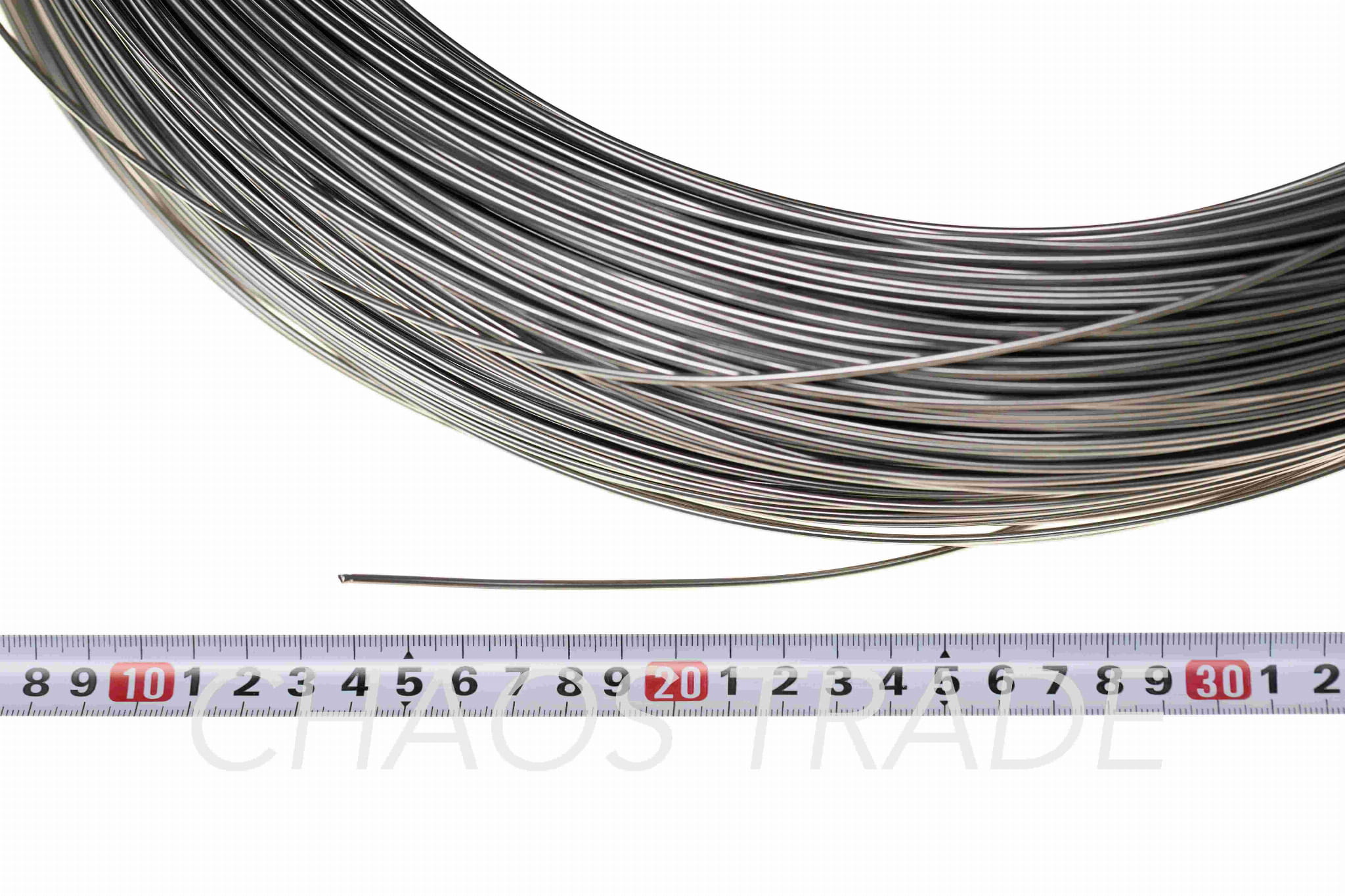
Nitinol wire 2mm 75-85°C polished - Shape Memory Alloy (SMA)
Regular price:
Regular price:
product unavailable
add to wish list
Description
Nitinol is a nickel-titanium alloy that has shape memory (SMA). This means that when a given temperature is reached, an object made of nitinol returns to the set shape.
Shape memory can be 1-way or 2-way.
1-way shape memory means that the alloy can be deformed at will and after reaching a given temperature it will return to a pre-programmed shape.
2-way shape memory means that the alloy has two pre-programmed shapes. For example, a nitinol spring with 2-way shape memory will shrink when heated and stretch when cooled. An analogous spring made from an alloy with 1-way shape memory will only shrink or only stretch when the temperature changes.
The wire on offer has 1-way shape memory. This means that we can bend it almost at will, and when the transformation temperature is reached, it will automatically return to its original shape.
What is worth knowing about the use of nitinol?
The higher the transformation temperature, the softer the wire will be and the easier it will be to form at room temperature. On the other hand, nitinol returns to the set shape the faster the higher temperature it is subjected to. For example, the wire in this offer with a transformation temperature of 75-85°C is quite soft at room temperature and deforming it does not require much force. At 80°C it will slowly return to its original shape, but to make this transformation fast it is best to put it in water at 90°C or more. To further speed up this transformation it is worth cooling the nitinol beforehand. Above the transformation temperature, nitinol becomes hard and springy. To heat the nitinol, a heat gun also works well.
A flame can also be used as a heat source, but be careful. Strong overheating of nitinol can partially or completely destroy the shape memory properties. Definitely avoid exceeding a temperature of 600-650°C. This corresponds roughly to the glow temperature.
Due to the rather large diameter of the wire, it is also necessary to change the shape of the wire slowly if possible - rapid bending of the wire can locally overheat it significantly, which can result in weakening of its memory ability.
Wires with small diameters react very quickly to a change in temperature - those with larger diameters react more slowly. The larger the diameter of the wire, the more force it will generate as it deforms. A firmly bent 2mm diameter wire dropped into a glass of hot water is capable of shattering that glass, while returning to its original shape - so be careful.
The wire on offer is chemically polished. In addition to the nice metallic luster, this also makes the nickel contained in the nitinol non-allergenic because the wire is coated with a thin but tight layer of titanium oxide.
Setting the new nitinol shape.
- The nitinol wire should be bent to the desired shape and secured so that it does not return to the pre-programmed shape during heating.
- According to the manufacturer, in order for the alloy to remember the new shape, it should be heated to a temperature of about 500-550°C and kept at this temperature for about 6 minutes.
- The nitinol should then be cooled quickly - for example, by dropping in the water.
- Due to the small diameter of the wire and the associated rapid heating, it is possible to provisionally fix the new shape by heating the nitinol with a torch and then quickly cooling it. As mentioned above, such a method risks permanently damaging the properties of the nitinol, so it is best to carry out preliminary tests on short sections of wire.
Basic data of the wire:
- diameter: 2mm (+/-0.02mm)
- transformation temperature: 75-85°C
- Composition: Nickel 55.62%, Titanium 44.38%
- Tensile strength(MPa): 1047
- Finish: chemical polishing