


- Luminescent pigments
- Other luminescent products
- Reflective powders
- Transparent dyes
- Thermochromic pigments
- Pearl pigments
- Chameleon color shifting pigments
- Metals and metal powders
- Photochromic pigments
- UV fluorescent pigments
- Fluorescent pigments
- Ceramic grinding media
- Other products
- New products
- Products on sale
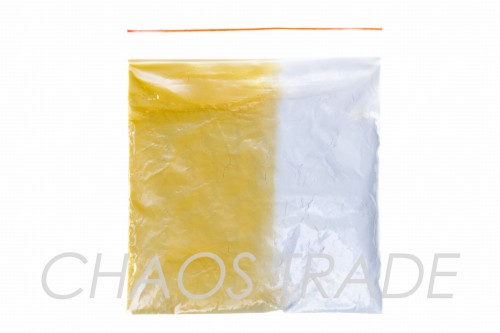
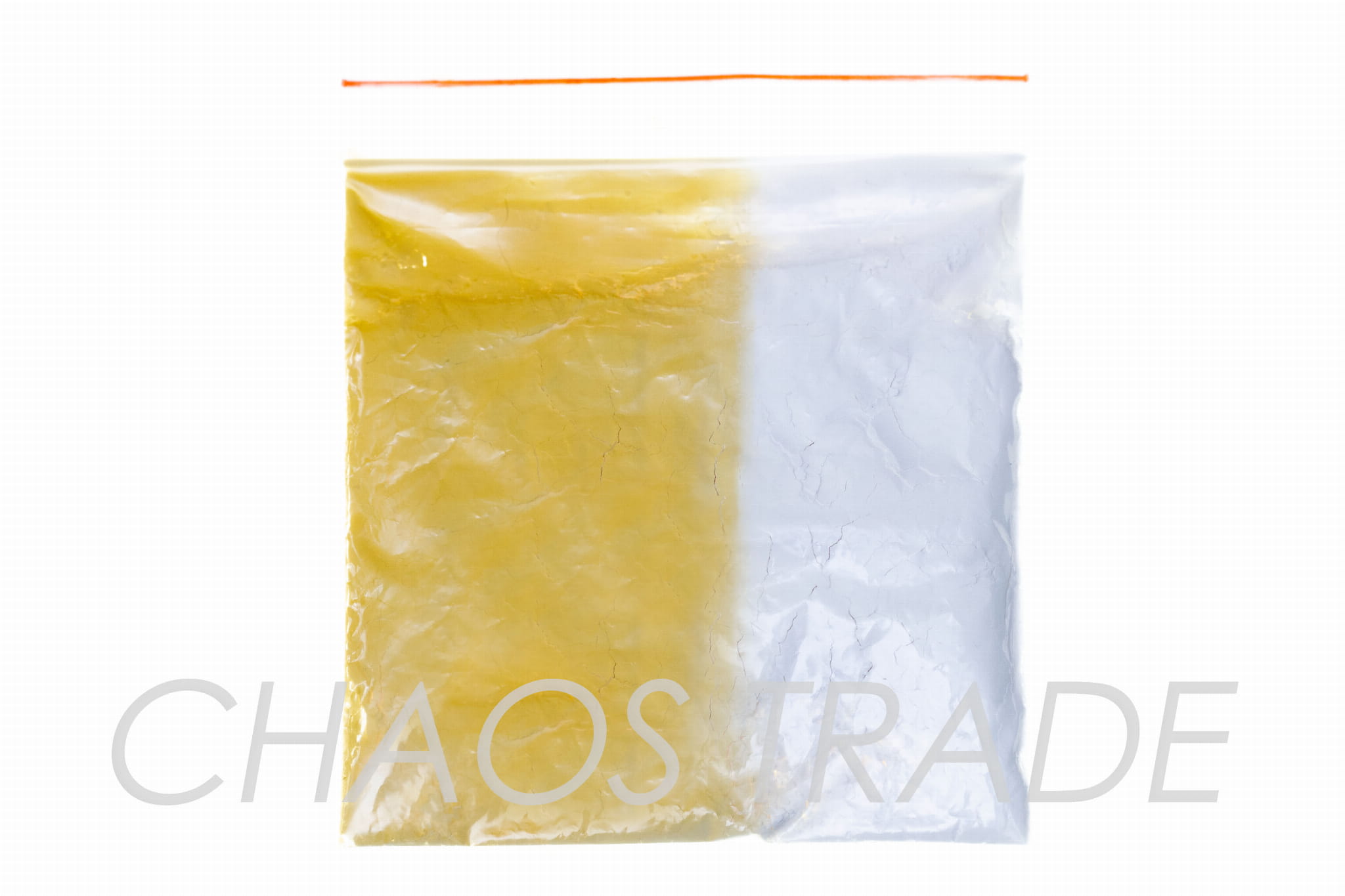
Yellow photochromic pigment PF-ZO

Regular price:
Regular price:
product unavailable
add to wish list
Description
Main feature of photochromic pigments is changing colour depending on lighting conditions. Under normal light those pigments are white or colour is only slightly visible - when exposed to sunlight or UV light in few second colour becomes intense. This process is fully reversible but photochromic pigments have quite short shelf life (around 12-24 months), also direct exposure of UV light for few hours can irreparably damage pigment (colour change process alter or it not work anymore).
When used properly this pigment can be mixed with various mediums such as: resins, plastics, paints, lacquers, inks and much more.
Photochromic pigment is technologically advanced product and on the contrary to many of our other pigments and dyes it has quite fragile structure. Because of that to fully enjoy this pigment properties and avoid damaging of pigment, few rules must be followed. Below you will find short summary of those rules. Nonetheless we encourage you to check full user guide and TDS - you will find those documents at the bottom of this page. Because photochromic pigments have similar structure as termochromic pigments (colour depending on temperature) there are the same usage rules. In commercial use please read user guide and make tests before production.
Basic pigment data:
Product code: PF-ZO
Colour when exposed to light: yellow
Density: 0,8g/cm3
Temperature resistance: 200°C (up to 10 minutes), avoid prolonged heating above 80°C.
Average particle size: 6,5μm
Shelf life: 2 years
Colour change times (without noticeable change): 5000
Basic rules of photochromic pigment usage.
1. Dosage: Use 0,5% up to 2,5% of pigment for casts or other thick products. For paints and inks pigment dosage is usually 8%-12%.
2. Pigment is made from microcapsules, which are sensitive to friction. Because of that hand mixing or low speed agitator is highly recommended to avoid damaging of microcapsules.
3. Photochromic pigment is sensitive to UV light. There is however no problem to add this pigment to UV hardened resins as hardening time is short. Contrary to that long time exposure to UV or direct sunlight will surely damage pigment. Because of that final product should be protected by layer of lacquer with UV protection - especially if product will be used under direct sunlight for longer periods of time. However such lacquer may alter colour changing process - so always make a test on small pigment amount.
4. Solvents with 3 or less carbon atoms in particle (such as methanol, ethanol, acetone) will damage pigment microcapsules within days or even hours. Even small addition of those solvents may damage pigment particles in long time term. On the other hand solvents with 6 or more carbon atoms in particle are considered as safe for pigment. Resins are mostly safe for photochromic pigment. When adding this pigment to water base such as acrylic lacquer keep in mind that pH should be in 2-8 range.
Storage and safety.
Photochromic pigment is hardly inflammable and non toxic. However contact with pure pigment may cause skin, eyes and airways irrytation. Use protection gloves, dust mask and protective glasses. Avoid generating dust during work with pigment.
Keep unused pigment in sealed container; in dark and cold place. Avoid exposition to UV and direct sunlight. Storage in 4-26°C temperature.